Guide · · By the CHSALL team
What can be customized on a cheer uniform (and what cannot)
Which parts of a cheer uniform you can change: silhouette, panels, colors, print, rhinestones, lettering and trim, and which parts are fixed by construction.
Key takeaways
- Almost everything visible can be changed: cut, panel layout, colors, decoration, lettering and trim.
- Decoration method limits the base fabric. Print, rhinestones and embroidery are not interchangeable on every cloth.
- Some combinations are not cheaper or faster, they are simply not reliable. Those are the ones to drop early.
- Send colors, logo artwork and size lists together, and confirm the whole brief in writing before production.
The short answer is that nearly everything visible on a cheer uniform can be changed. The useful answer is which changes are straightforward, which have consequences, and which are better abandoned before you fall in love with them. This guide walks through the uniform from the outside in.
Silhouette and cut
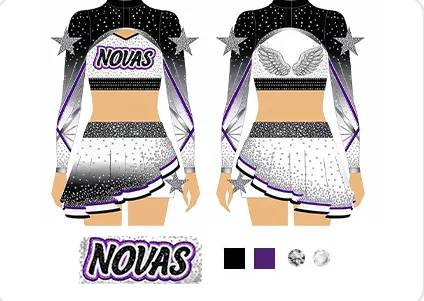
The shape of the garment is the most flexible part. Typical choices include the neckline (high neck, V, halter, racerback), the sleeve (long sleeve, three-quarter, cap or sleeveless), the top length (crop or full), and the bottom (skirt, shorts, skort or leggings). Changing the silhouette is a genuine design decision rather than a small edit, so it is worth deciding first, before colors and decoration.
Panel layout and color blocking
Panel layout is where most of the visual identity comes from. Moving a seam, widening a color block or adding a side stripe changes the way the uniform reads across the floor far more than a color swap does. This is the cheapest area to be ambitious in, because it usually costs nothing extra beyond design time.
Colour matching
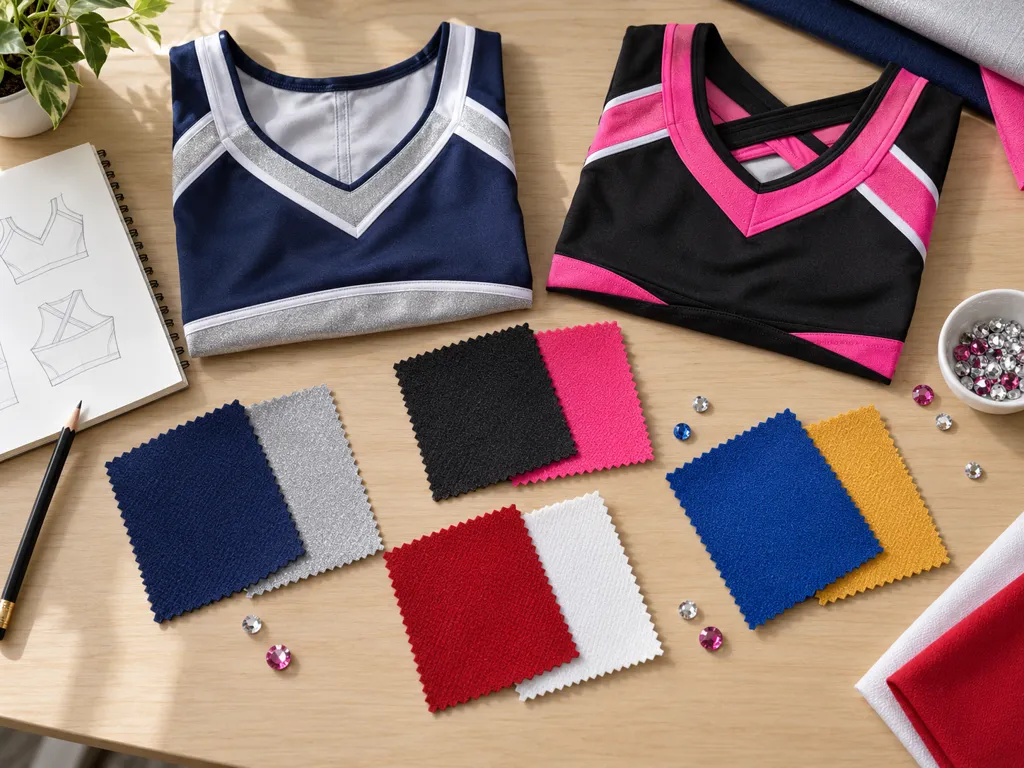
Team colors can be matched, but the reference you send decides how close the result is. Ranked from most reliable: a physical swatch, a PMS number, a hex code, then a photo. Screens shift colour, and fabric takes dye differently from paper, so always confirm the match in writing before production begins.
Decoration: print, rhinestones, applique, embroidery
Four decoration routes, with different trade-offs:
| Method | Best for | Watch out for |
|---|---|---|
| Sublimated print | Full-colour patterns, gradients, busy designs, practice wear | Colour is in the fabric; it cannot be added later |
| Rhinestone work | Sparkle, logos, focal points, lettering | Weight and care requirements; stones can be dislodged |
| Applique | Bold shapes and contrast lettering | Adds stiffness in the wrong place if overused |
| Embroidery | Small logo marks, names, fine detail | Reads poorly at large scale; drags on stretch fabric |
These methods combine, but not freely. A heavy stone field over a busy print reads as noise, and embroidery on a high-stretch panel can pucker. If you want more on how the two main routes compare, see sublimation vs rhinestone.
Lettering, numbers and logo
Team name, athlete numbers and your logo can all be placed to your layout. The constraints are legibility and method rather than permission: thin strokes disappear in stone, small marks disappear at distance, and two visually similar numbers cause mistakes in a lineup. Placement rules are covered in lettering and logo placement.
Trim, waistbands and small parts
Waistbands, piping, contrast binding, zip pulls, hair bows and leg trim are all choosable. They matter more than their size suggests, because they are what a judge sees at the edges of the silhouette. Specify them at the same time as the main design, since changing trim late affects the layout around it.
What is fixed by construction
Some things genuinely cannot be changed on a given style:
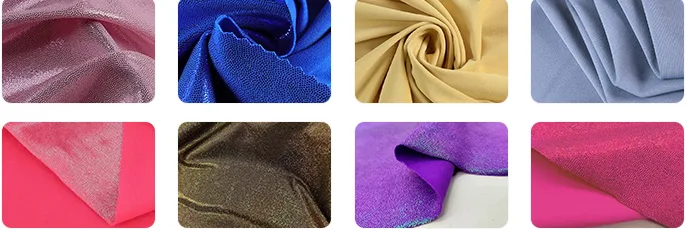
- Fabric and decoration pairings. Not every base fabric takes print, stone and embroidery equally well. A combination that looks fine on screen may be the wrong pairing in production.
- Stretch behaviour. A cut designed for a stretch knit cannot be made in a rigid woven cloth, or the fit changes completely.
- What is already cut. Once fabric is cut and printed, changes are a new order rather than an edit. This is why the approval step matters so much.
What to send with your quote request
- The silhouette or style you are starting from, with a reference image if you have one
- Colors, with the best reference you can provide
- Decoration preference and how much coverage you have in mind
- Logo artwork as a vector file if it exists
- Size list with quantities per size
- Your country and the date you need the uniforms in hand
Send what you have rather than waiting for a perfect brief. We will tell you which missing detail actually affects the quote, and which one can be settled later. A typical starting point is our cheer uniforms range or design concepts; programs that want a shape they already know can adapt this two-piece uniform with logo placement. Ordering for several teams, a gym or your own label? See wholesale and OEM.
FAQ
Can I change the fabric on an existing style?
Usually yes, within the fabrics that suit the decoration you have chosen. Print, rhinestone work and embroidery each need a base fabric that behaves a certain way, so a combination that looks fine on screen can be the wrong pairing in production. Ask for the fabric specification and a swatch with your quote.
Can you match our exact school colors?
Send a reference: a PMS number, a hex code, a photo of the existing kit or a physical swatch. Confirm the match in writing before production, because screens, printers and fabric all shift colour slightly.
Which part of a uniform do teams change most often?
Decoration and colour, not silhouette. Most programs start from a shape they already like and change the panel layout, colours and stone coverage, because that carries the least risk of the fit changing.
Planning team uniforms?
Send your style, colors, quantity and deadline: we reply with a quote. General MOQ 10 pcs, production 10–25 days.