Guide · · By the CHSALL team
Cheer uniform sleeve styles compared: long, three-quarter, cap, sleeveless, halter
Long sleeve, three-quarter, cap, sleeveless, halter and mesh cheer uniform sleeves compared: movement, coverage, decoration area and what suits each team.
Key takeaways
- Sleeve choice is a performance decision as much as a design one: it changes arm movement, warmth and how much decoration surface the uniform has.
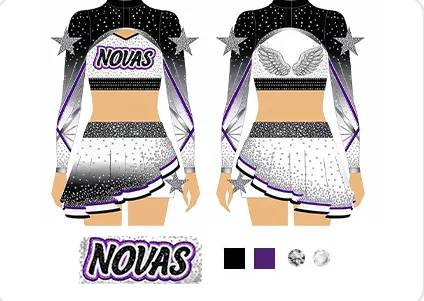
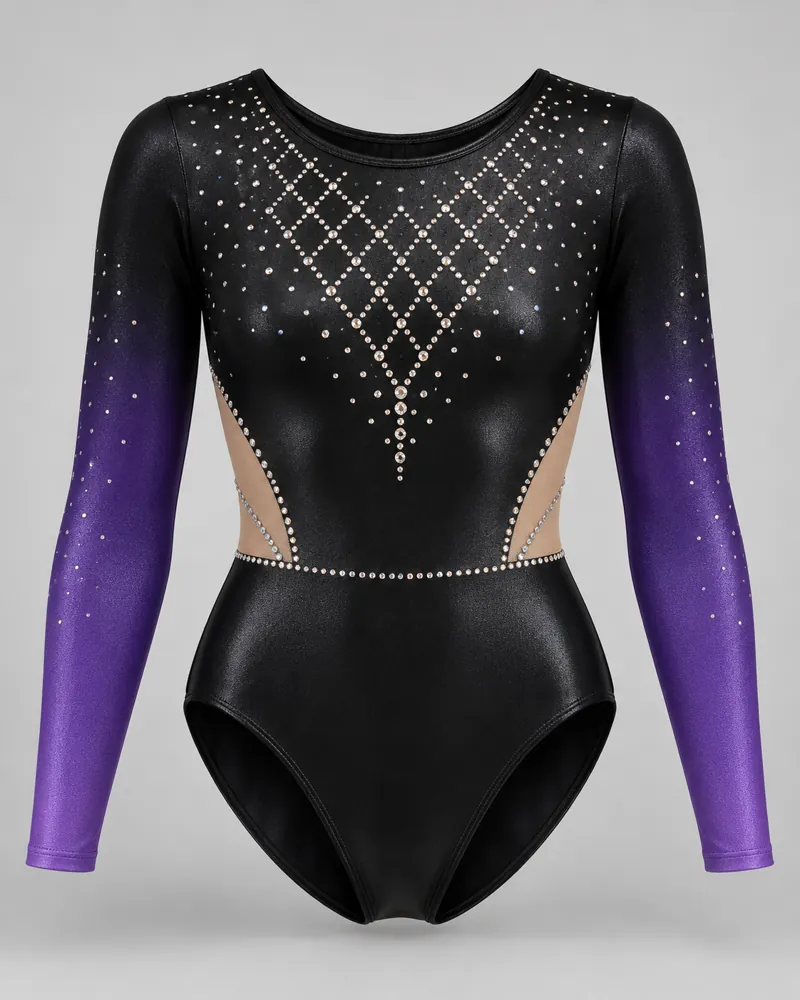
- Long sleeve gives the most decoration area and the most uniform line, and is the most common all-star choice.
- Sleeveless and cap sleeve free the arm line; halter and racerback change the shoulder line and the fit of the straps.
- Mesh reads as a sleeve but behaves like a light knit: more airflow, more care required, and more delicate than a solid sleeve.
Sleeves get chosen last, on looks. Then the team wears them for a season and discovers what the choice meant: arms that feel restricted in a stunt, stones that pull on a shoulder seam, or a uniform that photographs differently from the sketch. It is worth comparing the options on what they actually do rather than only on what they look like.
The comparison at a glance
| Style | Coverage and warmth | Decoration surface | Movement notes |
|---|---|---|---|
| Long sleeve | Most coverage, warmest option | Largest, best for stone fields and lettering | Fitted long sleeves need to be cut for shoulder rotation |
| Three-quarter | Moderate | Large, with a clean cuff line | Compromise between coverage and wrist freedom |
| Cap sleeve | Minimal shoulder coverage | Small accent area only | Least restrictive; little protection in a stunt |
| Sleeveless | None at the arm | Shoulder and chest only | Coolest; makes the arm line fully visible |
| Halter / racerback | Back coverage with an open shoulder | Front and back, but limited at the shoulder | Strap placement affects support and chafing |
| Mesh / illusion sleeve | Visual coverage, light warmth | Mesh is hard to stone densely | Airflow with a sleeve look; snags more easily |
Long sleeve
The classic competition choice, and the one most all-star programs still use. A long sleeve gives the largest continuous surface for decoration, which matters if you want stone work, contrast panels or lettering on the arm. It also presents a clean, unified line in a formation. The trade-off is warmth and fit: a long sleeve that is not cut for shoulder rotation will pull the moment an athlete raises their arms.
Three-quarter sleeve
Often the practical answer for teams who want the decoration surface of a sleeve without the fuss at the wrist. The cuff sits below the elbow, so it does not interfere with hand grips, and it reads almost identically to a long sleeve from the stands. If your athletes complain about long sleeves riding up under warm-ups, three-quarter is usually the fix rather than losing the sleeve entirely.
Cap and flutter sleeves
Small sleeves are an accent rather than a coverage decision. They frame the shoulder, add a colour line, and keep the arm almost entirely free. Where they fall short is in a stunt: a cap sleeve offers no protection where a base's hands land, and it gives very little room for decoration, so any lettering has to move onto the chest or back.
Sleeveless
Sleeveless is the coolest option and the most honest about the arm line, which cuts both ways: clean arm shapes look strong, but there is nothing to mask a bent line on a stunt. It is common in school and rec programs and in warmer venues. Bear in mind that sleeveless shifts all decoration to the front and back panels, which changes the balance of the whole design.
Halter, racerback and cold shoulder
These change the shoulder and strap line rather than the sleeve length. A halter concentrates support at the neck, a racerback frees the shoulder blades, and a cold shoulder puts a gap in the sleeve that reads modern but can move during stunts. Two practical checks before choosing: bra compatibility for the athletes who will wear it, and whether the strap edges sit where a harness or a base's hand will press.
Mesh and illusion sleeves
Mesh gives the appearance of a sleeve with much less warmth and a lighter look, and illusion netting in a skin tone creates the same effect with a different read. Two things to know: mesh cannot carry dense stone work, and it is more delicate than a solid knit, so it snags on velcro, zips and stoned areas of other garments. Care is the same as for stoned decoration, covered in how to wash a cheer uniform.
What to check before you choose
- Rules first. Competition and school rules on coverage vary by league and district. Confirm before you design around a sleeve.
- Ask the athletes. A one-line survey on how they feel about long sleeves in your venue prevents a season of complaints.
- Match the decoration method. A dense stone field needs a solid sleeve; mesh and cap sleeves suit print or light trim. See sublimation vs rhinestone.
- Keep practice consistent. Warm-up and practice layers look more considered when their sleeve length matches the competition uniform. Compare the options in practice wear.
- Check the color interaction. A sleeve in a second colour changes the shoulder line more than any other panel. See team colors.
Our all-star and competition and school and youth ranges both cover the sleeve styles above, and the full cheer uniform range includes examples by sleeve type. A long-sleeve cold-shoulder example is this black and mint rhinestone competition set, and a lace long sleeve with a softer read is this lace long-sleeve crop top set. Ordering for several teams, a gym or your own label? See wholesale and OEM.
FAQ
What sleeve length is standard for competition cheer uniforms?
There is no single standard. All-star programs most often use long sleeves for the decoration surface and the uniform line, while school and rec programs vary widely. Check your league or gym rules before committing.
Are long sleeves too hot for indoor competition?
Venues vary more than people expect, and mesh or lighter knit sleeves change the answer. If athletes get hot, the usual fix is a breathable sleeve rather than dropping to sleeveless, which changes the whole look of the uniform.
Do mesh sleeves tear easily?
Mesh is more delicate than a solid knit and can snag on velcro, zips and stoned areas of other garments. It holds up well under normal use, but it should be washed with the same care as stoned decoration.
Planning team uniforms?
Send your style, colors, quantity and deadline: we reply with a quote. General MOQ 10 pcs, production 10–25 days.